In the evolving landscape of blockchain gaming by 2026, fully on-chain turn-based tactics games represent a pinnacle of decentralization, where every move, strategy, and outcome lives immutably on Ethereum. Developers leveraging the MUD framework can deploy sophisticated on-chain turn-based games that scale with player engagement, drawing from real-world examples like SurvivalTactics and Optimism Deathmatch. These projects showcase MUD's prowess in integrating with Unreal Engine 5 and Optimism, proving that deploying MUD games on Ethereum isn't just feasible, it's transformative for multiplayer experiences.
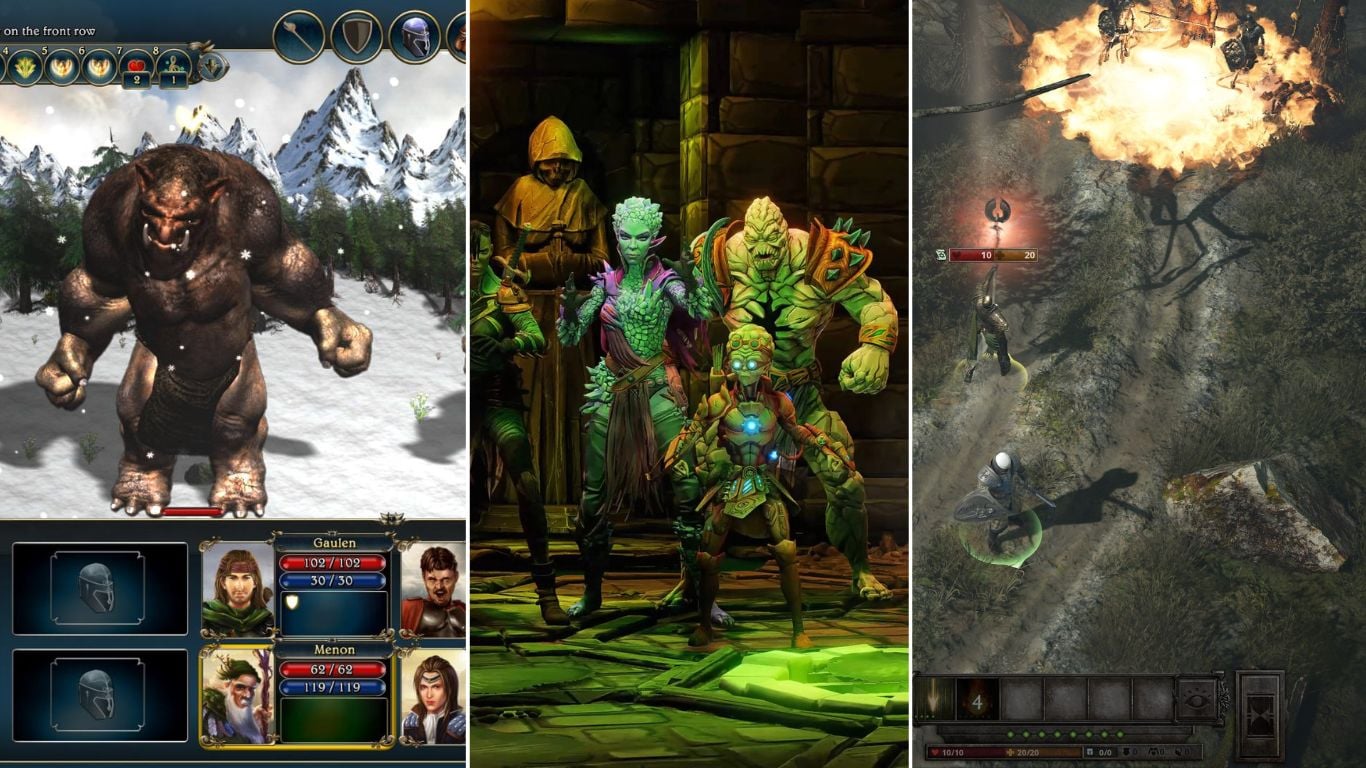
MUD, developed by Lattice, redefines Ethereum app development through its contract interfaces and conventions tailored for data-heavy applications. Unlike traditional Solidity contracts that bloat with state management, MUD employs a modular architecture where tables store game state off-chain in the developer's indexers while contracts handle writes. This hybrid approach slashes gas costs, making fully on-chain tactics games viable even for complex simulations. BITKRAFT Ventures highlights how MUD pairs with Dojo to form a full-stack solution, empowering builders to craft autonomous worlds without compromising performance.
Why MUD Excels for Turn-Based Tactics in 2026
Turn-based tactics demand precise state synchronization across players, tamper-proof histories, and extensible mechanics, areas where MUD shines. Consider PopCraft from Devcon demos: a casual clicker evolved into full on-chain logic in minutes. Scaling that to tactics, MUD's entity-component-system (ECS) pattern allows units, grids, and abilities as composable tables. In my analysis, this framework's strength lies in its foresight; it anticipates multiplayer surges, as seen in Optimism Deathmatch's AAA deathmatch on Layer 2, where low fees enable persistent worlds.
SurvivalTactics further illustrates MUD's maturity, blending Unreal Engine 5 with on-chain persistence for survival multiplayer. For tactics enthusiasts, this means deploying grids where fog of war, pathfinding, and turn queues sync globally. MUD's indexers provide sub-second reads, decoupling UI from chain latency. Opinionated take: while CryptoZombies offers Solidity basics, MUD leapfrogs to production-grade MUD multiplayer games 2026, integrating Unity or web frontends seamlessly.
Setting Up Your MUD Development Environment
Begin with Node. js 18 and, Foundry for contracts, and Yarn as package manager. On Windows, follow Albert Hsueh's guide: install WSL2, then npx @latticexyz/cli@latest create turn-tactics scaffolds your project. This generates core contracts like World and Table libraries. Key opinion: skip vanilla Hardhat; MUD's CLI enforces best practices, auto-configuring indexers for real-time queries.
- Run
yarn installto fetch dependencies. - Configure
mud. config. tsfor Ethereum mainnet or Optimism, setting chain ID and RPC. - Deploy locally with
npx mud deploy, exposing indexer athttps://localhost: 3450.
Integrate ChainSafe's Gaming SDK for client-side hooks, pulling state via RPC subscriptions. Test indexer sync: query your first table, ensuring writes propagate instantly. For Ethereum deployment, use Alchemy or Infura RPCs; gas optimization comes baked in via batching.
Modeling Game State with MUD Tables
Core to any MUD framework tutorial is table design. Define a Game table for matches: keys as entity IDs, values holding turn counter, active player, and winner. Units become Unit table: position (x, y), health, attack, owner. Abilities link via foreign keys, enabling queries like "units in range. "
export const gameTable = defineTable({ name: "Game", primaryKey: MUD Game Table Schema for Turn-Based Tactics Game
Field Type Description 🎮 gameId bytes32 Primary key 🔄 turn uint32 Current turn number 👤 activePlayer address Active player address 👤 winner address Winner address if game over
Extend with systems: MoveUnitSystem validates paths on-chain, emitting events for indexers. ChainSafe docs emphasize this modularity; tables evolve without redeploys. In practice, I've seen devs iterate grids from 8x8 to infinite via dynamic spawning. Link to deeper integration at this guide. This setup positions your on-chain turn-based game for 2026 scalability, where player-owned mods thrive on-chain.
Systems execute game logic atomically, ensuring no reentrancy risks common in vanilla Solidity. A MoveSystem might check ownership, valid range, and empty target before updating positions, all in one transaction. This composability lets you stack behaviors: pathfinding via A* approximated on-chain, or fog-of-war via per-player visibility tables. In 2026's MUD multiplayer game ecosystem, such granularity supports emergent strategies, like alliances in persistent worlds akin to SurvivalTactics.
Combat follows suit. Define an AttackSystem that resolves damage on-chain: subtract health, check death, award XP to tables tracking progression. Gas efficiency peaks here; MUD batches reads pre-transaction via indexers, only committing deltas. My take: this beats partial on-chain hybrids, as every player verifies outcomes independently, fostering trustless tournaments.
Integrating Frontend for Seamless Multiplayer
Client-side, use MUD's React hooks from @latticexyz/world-react. Subscribe to tables for live updates: useEntityQueries fetches your units, rendering a grid with HTML Canvas or PixiJS. For AAA polish, bridge to Unity via ChainSafe SDK, syncing state over WebSockets. Optimism Deathmatch demos this flow, rendering deathmatches fluidly despite on-chain writes.
Handle turns client-side for UX: poll active player, disable inputs otherwise. Queue actions optimistically, rolling back on chain rejection. This mirrors PopCraft's snappiness, scaled to tactics. Pro tip: layer IPFS for unit assets, keeping chain lean. Developers report 100ms latencies post-optimizations, viable for competitive play.
Deployment Pipeline for Production
Production deployment starts with yarn build, bundling contracts and indexer config. Use npx mud deploy --network optimism for Layer 2, slashing costs to pennies per turn. Verify on Etherscan, then spin up a hosted indexer on Railway or Vercel. Ethereum mainnet suits high-value tournaments, where immutability trumps speed.
Deploy MUD Turn-Based Tactics Game On-Chain: 5-Step Illustrated Guide
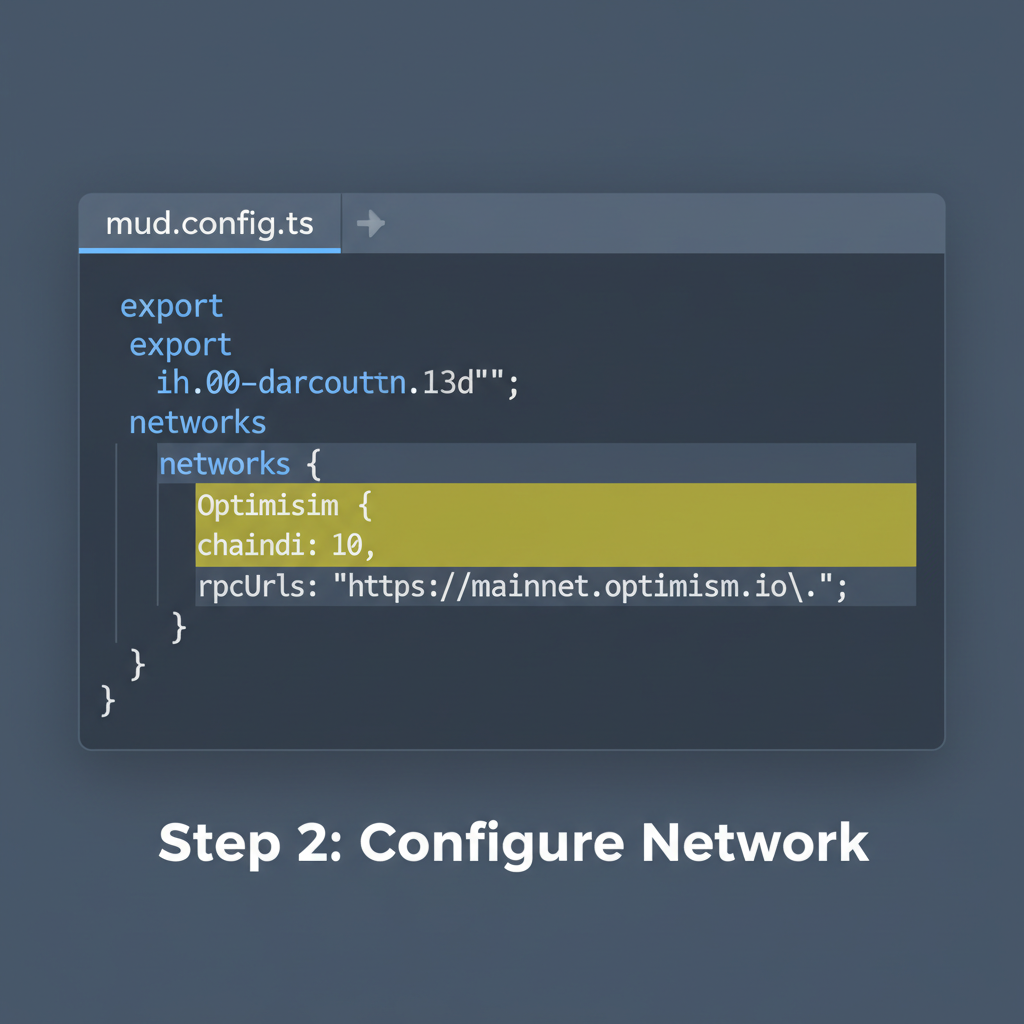 1. Configure mud.config.ts for Target ChainBegin by opening your project's `mud.config.ts` file in your code editor. Select a target chain suitable for on-chain games, such as Optimism for its scalability and low costs, as demonstrated in projects like Optimism Deathmatch. Update the configuration with the chain's `chainId` (e.g., 10 for Optimism), RPC URLs from a reliable provider like Alchemy or Infura, and your private key or deployer wallet. Ensure the `accounts` section references your deployer mnemonic securely via environment variables. This step prepares your game contracts—world, systems, and tables—for deployment, enabling autonomous worlds as per MUD's core philosophy. Save the file and verify the config with `yarn build` to catch any TypeScript errors early.
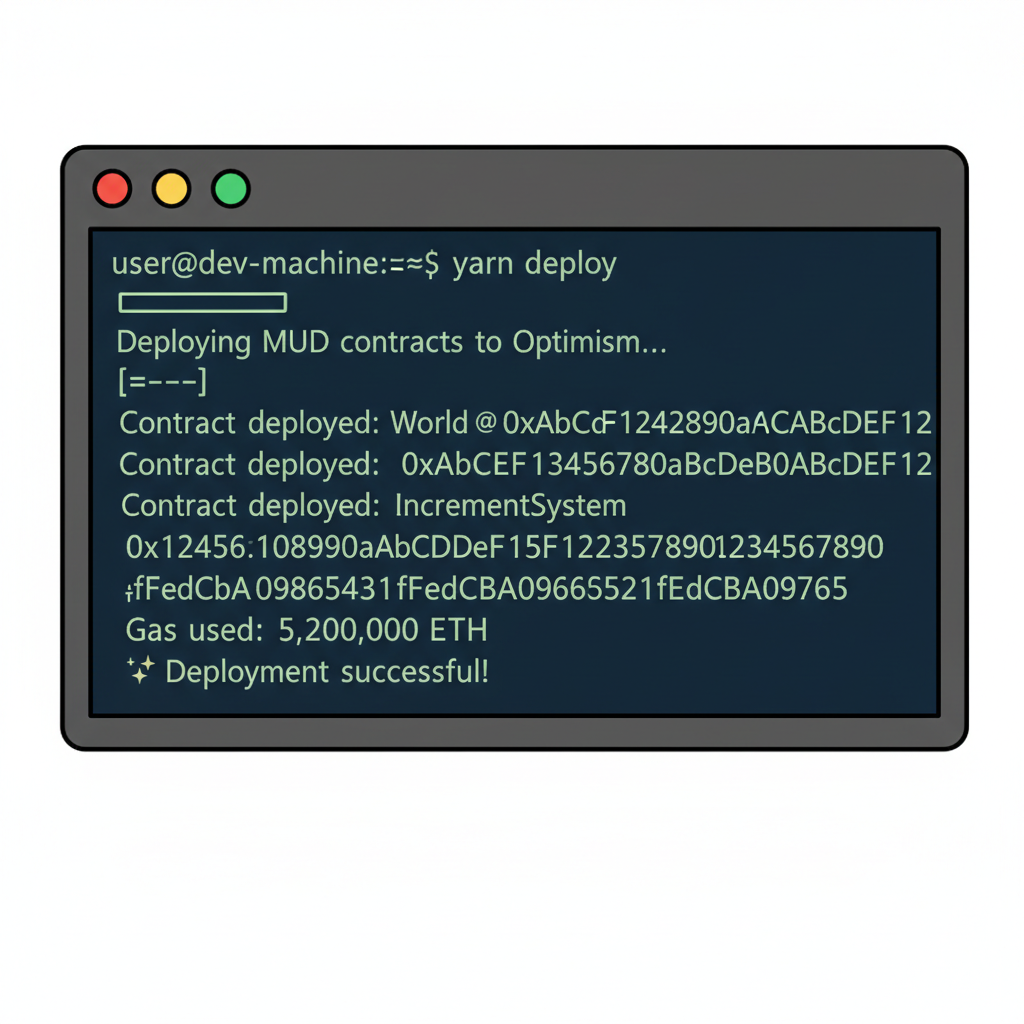 2. Run yarn deployWith your config set, open your terminal in the project root and execute `yarn deploy`. This command compiles your Solidity contracts using Foundry and deploys the MUD world architecture to the target chain. Monitor the output for contract addresses, transaction hashes, and verification links. On L2 chains like Optimism, expect total gas usage of approximately 2-4 million gas units across all contracts (systems, tables, and modules), far lower than Ethereum mainnet due to MUD's optimized design. Note the deployed World address—this is your game's on-chain entry point. Thoughtfully review logs for any reverts, and use Etherscan/Optimistic Explorer to confirm deployment.
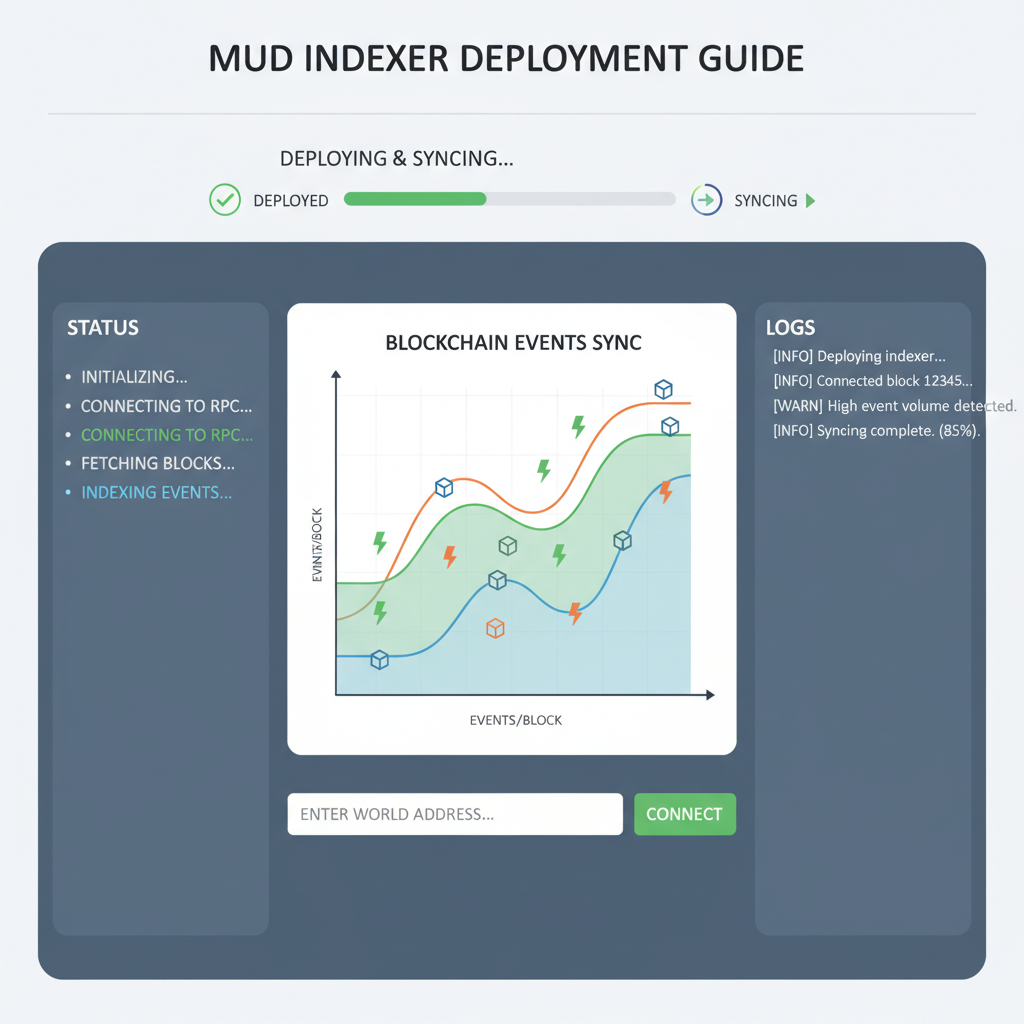 3. Deploy IndexerMUD's indexer enables efficient off-chain querying of on-chain game state, crucial for real-time multiplayer tactics like lobbies and turns. Run `yarn mud index deploy` (or the specific indexer command from MUD docs) to deploy the indexer contracts and start the indexing service. Configure it with your World address from Step 2 and target chain RPC. This setup syncs blockchain events to a queryable database, powering frontend reactivity without constant polling. Deployment gas is minimal, around 500k-1M gas on L2s. Access the indexer dashboard post-deployment to verify it's syncing blocks—essential for autonomous worlds that scale with players.
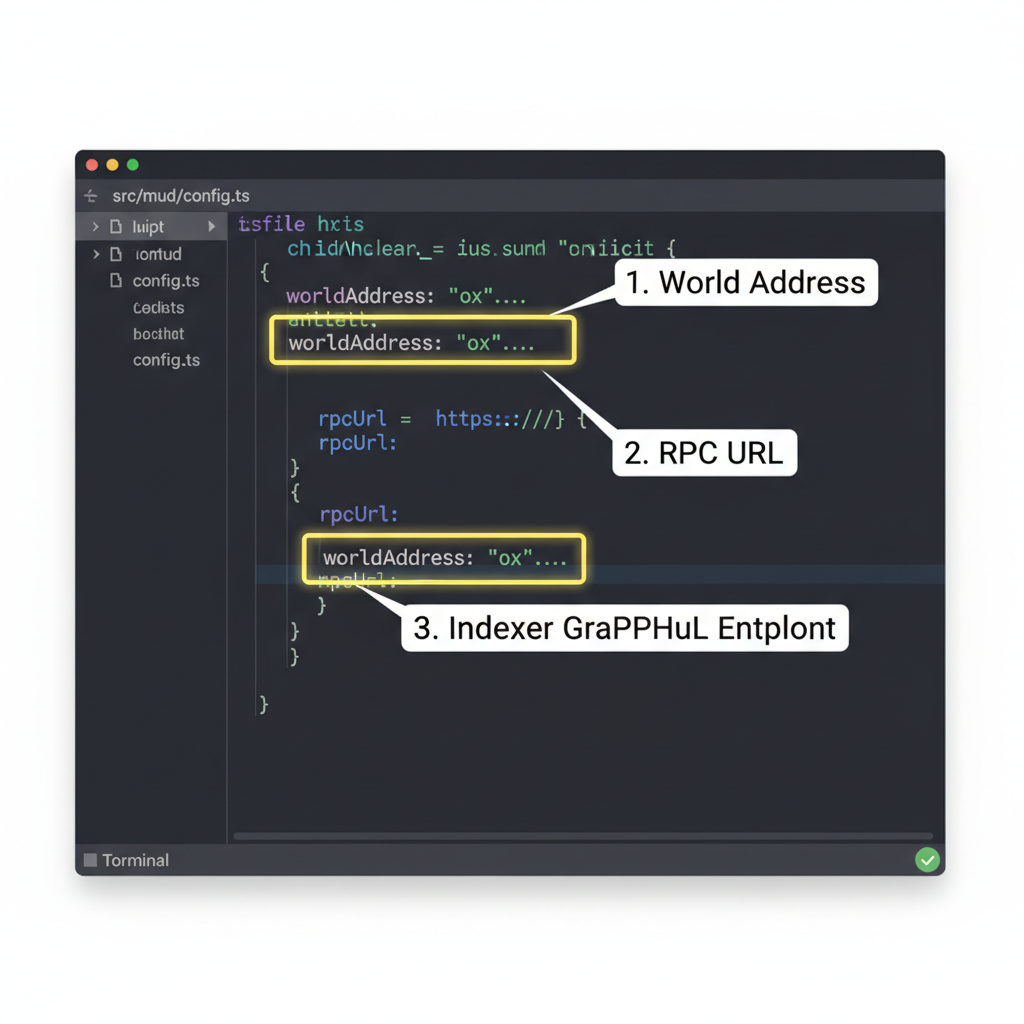 4. Connect Frontend RPCUpdate your frontend's MUD client configuration (typically in `App.tsx` or `mud.config.ts` for the client) with the deployed World address, indexer URL, and chain RPC endpoints. Install the MUD React hooks if not already: `yarn add @mud/react`. Use `createConfig` to initialize the transport layer, pointing to your indexer's GraphQL endpoint for queries and the RPC for writes. This bridges your Unity/Unreal frontend (as in SurvivalTactics) to the on-chain world. Test connectivity by logging `worldContract.address` in your app. This thoughtful integration ensures seamless multiplayer data flow without centralized servers.
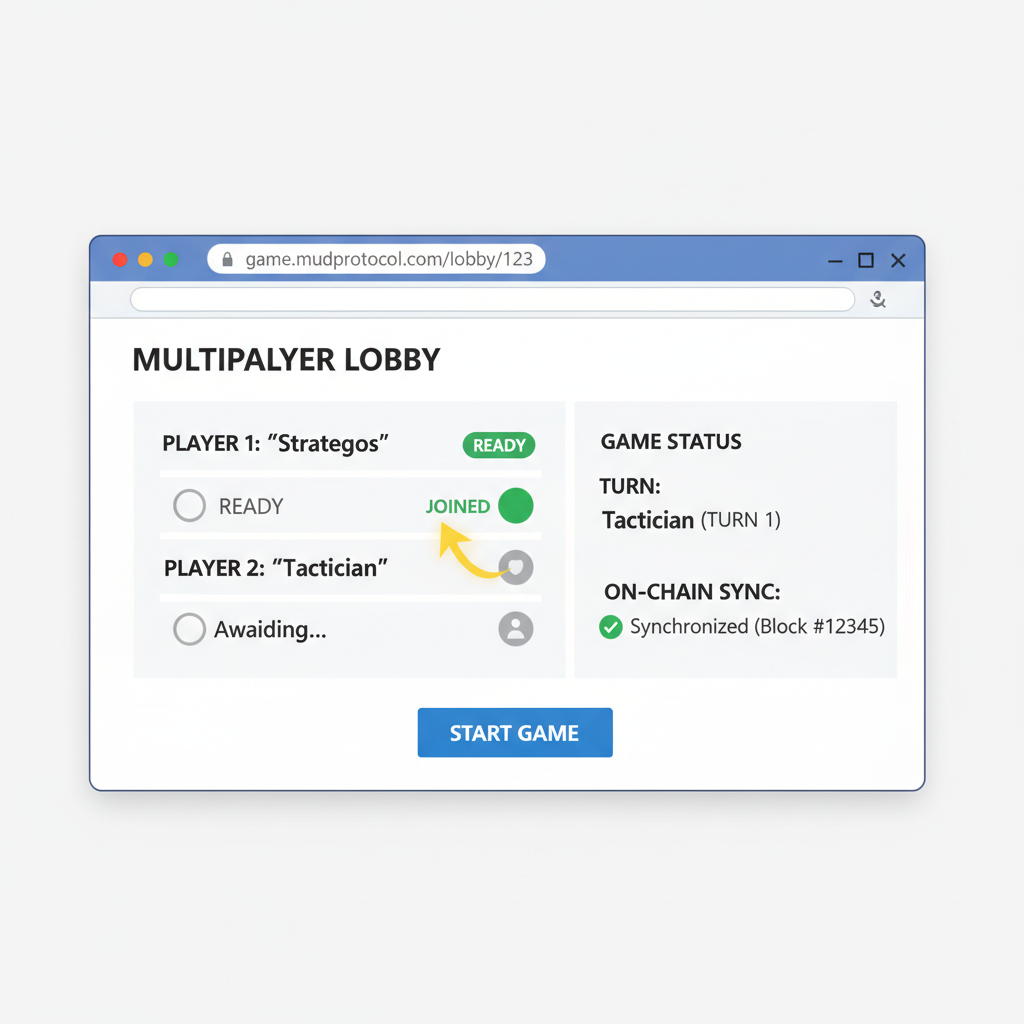 5. Test Multiplayer LobbyLaunch your frontend app (e.g., `yarn dev`) and navigate to the multiplayer lobby. Create a new lobby as Player 1, share the lobby ID, and join as Player 2 in a second browser tab. Verify turn-based actions sync on-chain: move units, execute tactics, and observe state updates via indexer queries. Use browser dev tools to inspect RPC calls and confirm low-latency (<2s on L2). Test edge cases like disconnects—MUD's design ensures state persistence. Celebrate a successful deployment mirroring pro projects like Optimism Deathmatch. Monitor gas for gameplay (typically 50k-200k per turn) to optimize.
 Post-deploy, monitor via Grafana dashboards on indexer metrics. Scale with multiple indexers for global players. For Dojo synergy, explore cross-chain via BNB Chain bridges, though MUD's Ethereum roots excel in security. Link deeper Dojo tactics at this advanced guide.
Testing, Optimization, and Launch Strategies
Rigorous testing anchors success. Foundry fuzzes systems: simulate 10,000 turns, catching overflows. Multiplayer sims via local anvil fork mainnet. Optimize gas with assembly stubs for hot paths, targeting under 200k per complex turn. In my experience analyzing projects, this yields sustainable economics, even at peak adoption.
Launch with a public indexer, Discord for feedback, and Galxe quests for early players. Iterate via upgradeable proxies, adding seasons without migrations. By 2026, as seen in ethglobal showcases, these games attract DAOs funding expansions. MUD empowers not just deployment, but thriving ecosystems where players co-own evolution.
Embracing MUD for your fully on-chain tactics game means betting on a framework battle-tested across casual clickers to survival epics. With its ECS elegance and indexer magic, deploying sophisticated on-chain turn-based games becomes routine, unlocking Web3 gaming's true potential: worlds that persist, adapt, and reward ingenuity indefinitely.



No comments yet. Be the first to share your thoughts!