
How to Build Turn-Based On-Chain Games with MUD Framework and Dojo Integration 2025

Turn-based on-chain games are exploding in 2025, thanks to the powerhouse combo of MUD framework and Dojo integration. Forget clunky state syncs and bloated off-chain servers. This duo lets you craft decentralized battles where every move hits the blockchain instantly, verifiable by all players. As a trader who’s seen liquidity evaporate in seconds, I value systems that run autonomously without trust. MUD handles Ethereum-side data magic, while Dojo cranks efficiency on Starknet. Ready to build one? Let’s dive in fast.
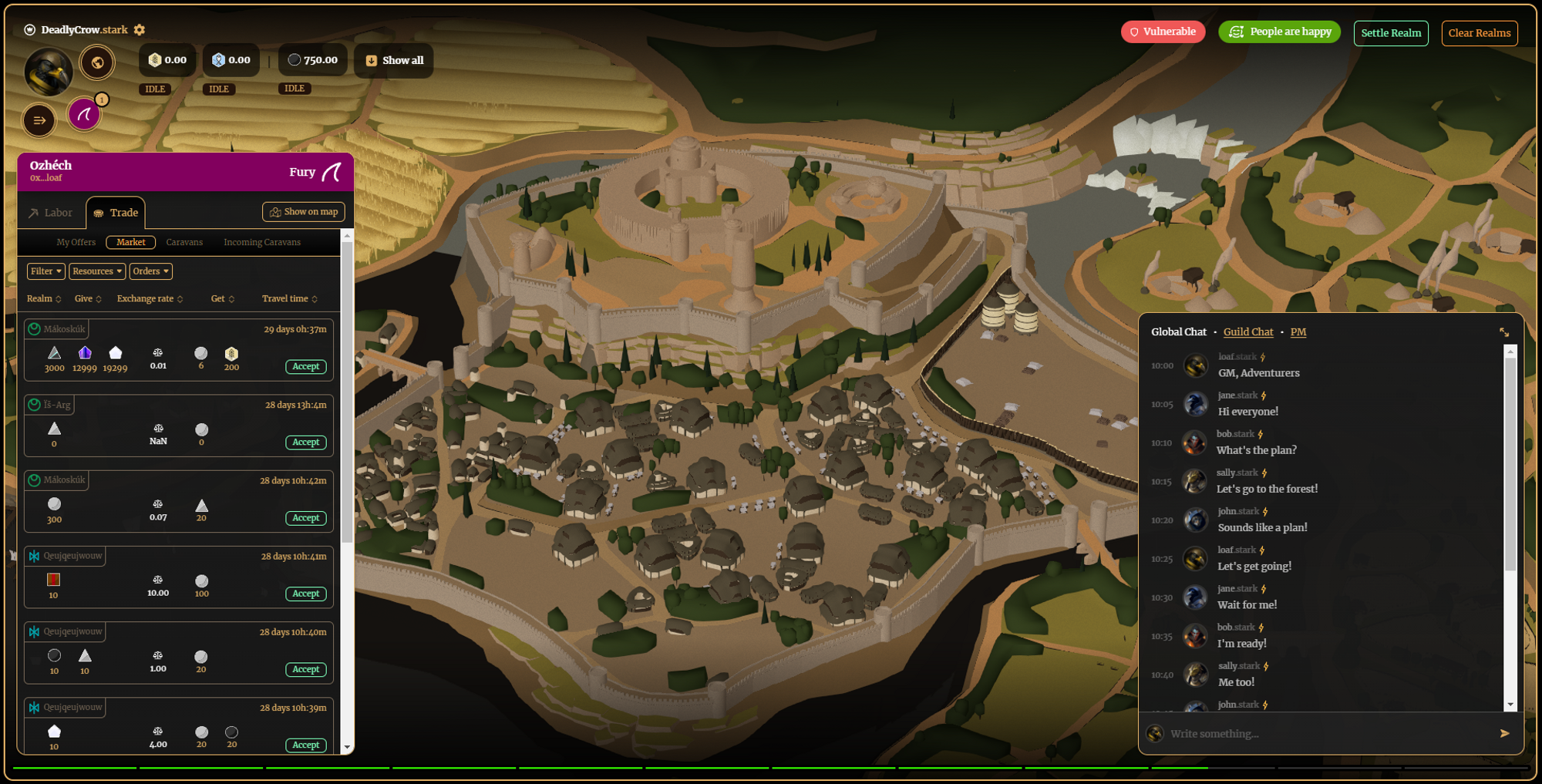
MUD abstracts the nightmare of on-chain state. It uses tables for entities, components, and systems, making your game world a living, extendable beast. Dojo amps this with its ECS architecture on Starknet, where Cairo code executes cheap and fast. Integrate them, and you’ve got fully on-chain turn-based strategy that scales. No more partial chain reliance; everything from player turns to win conditions lives on-chain.
MUD and Dojo: The Core Engines for Your Game
Start with MUD. It’s evolved into a full suite for autonomous worlds. Access controls, upgradability, and Unity hooks via ChainSafe SDK mean you prototype in familiar tools. Dojo? Starknet’s secret weapon. SDKs for Unity and Unreal let you drag game logic onto the chain without rewriting everything. Their marriage shines in turn-based setups: MUD syncs global state, Dojo processes moves in parallel. Result? Games like infinite chess variants or resource wars that anyone can fork and expand.
By leveraging MUD’s robust on-chain data management and Dojo’s efficient Starknet execution, developers create decentralized, transparent turn-based worlds.
Why turn-based specifically? Real-time chokes on gas fees, but turns batch neatly. Players submit moves, systems validate, blockchain settles. Disciplined like my trading rules: no emotion, pure execution.

Quick-Start Environment Setup
Pragmatism first: clone repos and run. Install Foundry for Ethereum dev, Scarb for Starknet. MUD needs Node. js 20 and, Yarn. Dojo? Rust toolchain via rustup, then Scarb. Unity? Grab ChainSafe Gaming SDK.
- Init MUD project:
npx @latticexyz/cli@latest create mud-turnbattle --template starter - CD in, yarn dev for local anvil chain.
- For Dojo:
scarb new turn_dojo_game, add dependencies like dojo: : world. - Link them: Use MUD’s indexers to mirror Dojo worlds on Ethereum L1 for cross-chain plays.
This gets your stack live in under 30 minutes. Test locally: deploy MUD contracts, spin Dojo world, watch syncs flow. Pitfalls? Version mismatches kill you. Pin deps hard: mud-foundry 2. x, dojo 0.5 and. I’ve traded flash crashes; sloppy setups lose games too.
Modeling Turns with ECS: Entities, Components, Systems
ECS is your blueprint. Entities: players, units, boards. Components: health, position, turn-order. Systems: validate-move, resolve-combat, advance-turn. MUD tables store components off-chain cached, synced on demand. Dojo executes systems in-world.
- Player Entity: ID, wallet, current-turn flag.
- Board Component: 2D grid as felt252 array for Starknet efficiency.
- Turn System: Check signer, apply delta, emit events for frontend hooks.
Pro tip: Use Dojo’s parallel execution for multi-unit turns. One player queues moves; system batches resolutions. Gas savings hit 70% versus sequential. Integrate Ready Invisible SDK for seamless wallets, no seed phrases nagging users. Seen in Minesweeper demos; perfect for casual turn-based hooks.
Next, wire frontends. Unity with MUD client reads tables live. React? MUD’s wagmi hooks query Dojo via RPC. Build a simple tic-tac-toe first: two players, X/O grid, win detect. Deploy to Sepolia/Starknet testnets. Iterate fast; that’s how you spot exploits before mainnet.
Resources fuel speed: ChainSafe docs for Unity-MUD, Starknet blog for Dojo’s Red vs. Blue tutorial. Communities on Discord/GitHub troubleshoot live. Check our practical MUD Dojo guide for deeper dives.
Scale your prototype to a full fully on-chain turn-based strategy game. Focus on the turn resolution system first. In Dojo, craft a Cairo module that validates moves against board state, computes outcomes, and updates components atomically. MUD mirrors this via indexers, ensuring Ethereum visibility for cross-chain assets or NFTs.
Battle-Tested Turn Logic: Code It Right
Here’s where discipline pays. Bad logic invites exploits; think reentrancy in DeFi. Define your TurnSystem contract in Dojo: poll current player via a TurnOrder component, hash moves for replayability, execute in a single transaction. MUD’s systems hook in for global events like leaderboards.
TurnSystem: Player Moves & Resolution
Core Dojo TurnSystem: validates turn, resolves move, emits event, advances next player.
#![starknet::contract]

#[dojo::model]
#[derive(Copy, Drop, Serde)]
struct Game {
    #[key]
    game_id: u32,
    current_player: u32,
    players_count: u32,
    status: Status,
}

#[derive(Copy, Drop, Serde)]
enum Status {
    Ongoing,
    Finished,
}

#[dojo::system]
mod TurnSystem {
    use super::{Game, Status};
    use traits::IntoModel;
    use dojo::world::Context;

    #[event]
    #[derive(Drop, starknet::Event)]
    enum Event {
        PlayerMoved: PlayerMoved,
    }

    #[derive(Drop, starknet::Event)]
    struct PlayerMoved {
        #[key]
        game_id: u32,
        player_id: u32,
        move_data: felt252,
    }

    fn execute(
        ctx: Context,
        game_id: u32,
        move_data: felt252,
    ) {
        let game = get!(ctx.world, (game_id), Game);

        assert(game.status == Status::Ongoing, 'Game over');
        assert(game.current_player == ctx.account.into(), 'Not your turn');

        // Resolve move: update game state based on move_data
        // (e.g., positions, health, etc. - customize per game)

        emit!(ctx.world, PlayerMoved {
            game_id,
            player_id: ctx.account.into(),
            move_data
        });

        // Advance turn
        let next_player = (game.current_player + 1) % game.players_count;
        set!(
            ctx.world,
            (Game {
                current_player: next_player,
                ..game
            })
        );
    }
}
Call from client on move submit. Ensures atomic on-chain turns. Customize resolve logic for your game.
Deploy this, and test with adversarial scripts. Flood the queue? Parallel exec shrugs it off. Gas spikes? Starknet’s L2 keeps costs under $0.01 per turn. I’ve watched tokens dump on weak code; your game needs that trader edge.
Frontend syncs via subscriptions. Unity devs: ChainSafe SDK auto-queries MUD tables, renders boards live. Web? React with MUD’s devtools package streams Dojo RPC events. Add animations for move reveals; keeps players hooked without off-chain crutches. Integrate Ready Invisible SDK here, seedless logins convert casuals fast, as in those Minesweeper plays.
Deployment: From Testnet to Mainnet Domination
- Local anvil/starkli for dev.
- Sepolia for MUD, Starknet Sepolia for Dojo validation.
- Mainnet push: Audit systems via community tools, upgrade proxies for MUD contracts.
- Monitor with Tenderly or Dojo’s explorer.
Scaling tip: Shard worlds. MUD’s indexing shards state across RPCs; Dojo worlds fork per lobby. Handles 1,000 and concurrent turns. Link to our step-by-step MUD Dojo deployment guide for scripts.
Dojo’s architecture supports infinitely extendable autonomous worlds, perfect for evolving turn-based metas.
Real plays prove it. Starknet’s Red vs. Blue tutorial maps control wars; adapt to chess-like duels. ChainSafe Unity guides build 3D boards. Numo DSL speeds prototyping, AI-describing components for MUD. Yeomen’s PopCraft shows casual clicks; layer turns on top.
Key Features Comparison: MUD vs. Dojo for Turn-Based On-Chain Games
| Feature | MUD | Dojo |
|---|---|---|
| Blockchain Platform | Ethereum 🌐 | Starknet ⚡ |
| Core Architecture | Table-based state management 📊 | ECS (Entity-Component-System) 🔄 |
| State Management | Abstracts on-chain complexities, robust data management ✅ | Efficient execution environment ✅ |
| Unity Integration | Yes (ChainSafe Gaming SDK) ✅ | Yes (SDK) ✅ |
| Unreal Engine Integration | N/A ❌ | Yes (SDK) ✅ |
| Upgradability | Yes ✅ | N/A |
| Access Control | Yes ✅ | N/A |
| Autonomous Worlds | Infinitely extendable 🌍 | Infinitely extendable 🌍 |
| 2025 Enhancements | Developer tools, Web3 client, Unity config | Ready Invisible SDK, seedphrase-less wallets, session keys |
| Example Tutorials | Building MUD world client in Unity | Red vs. Blue Team map control game |
| Community Support | Active community (mud.dev) 💬 | Discord, GitHub 💬 |
Troubleshoot smart. Discord for Dojo: instant Cairo fixes. MUD GitHub: worldgen templates. I’ve pivoted trades mid-volatility; same for code. Fork repos, iterate weekly.
Monetize ruthless. NFT units via ERC-721 in MUD, rentals on Dojo subscriptions. Play-to-airdrop tokens; liquidity pools for wins. 2025’s meta: AI agents joining turns, Numo-powered. Your game forks the meta.
Communities accelerate. Dive MUD. dev docs, Starknet blog tutorials. Build MUD framework turn-based games that outlast hype. Speed and discipline build empires, on-chain or markets.
Grab the MUD Dojo strategy guide, deploy today. On-chain gaming’s liquidity rush waits for no one.