
New Age MUD Gaming Explained: Building Fully On-Chain Games with Mud and Dojo Framework

In the ever-shifting sands of blockchain gaming, a new era dawns with new age MUD gaming, where the Mud Dojo framework reigns supreme. Picture this: games not just played, but lived on-chain, every decision, every victory inscribed indelibly on the blockchain. No servers to crash, no central authority to pull the plug. Fully on-chain games promise transparency that borders on magic, drawing players into worlds that evolve autonomously. Inspired by pioneers like Dark Forest, developers now wield MUD and Dojo to craft these digital realms, blending Ethereum’s robustness with StarkNet’s zero-knowledge prowess.

The Genesis of Fully On-Chain Innovation
Our story begins in 2021, when the Lattice team, captivated by Dark Forest’s on-chain triumphs, embarked on zkDungeon. This wasn’t mere experimentation; it was a manifesto for fully on-chain games Mud architecture. Fast forward to today, and frameworks like MUD and Dojo have ignited a revolution. BITKRAFT Ventures notes how these tools democratize complex game logic, moving us from clunky client-server models to provable, composable universes. Autonomous worlds, as Dojo Engine describes, embody key traits: determinism, extensibility, and player sovereignty. No more trusting black-box simulations; every tick of the game clock is verifiable.

Ryze Labs highlights events like the ETH AW Hackathon as catalysts, propelling Dojo on-chain gaming and MUD into the spotlight. Medium analyses trace the history: from simple on-chain experiments to sophisticated engines handling real-time strategy and RPGs. Gate. com breaks down design paradigms, positioning Mud, Dojo, and others as divergent paths to the same holy grail: immutable fun.
MUD: Crafting Ethereum Worlds with ECS Elegance
Enter MUD, Lattice’s open-source gem for Ethereum and EVM chains. At its heart lies the Entity-Component-System (ECS) architecture, a modular blueprint that lets developers snap together game systems like Lego bricks. The Store acts as an on-chain database, while the World provides standardized access and upgrades. Mud. dev touts it as the protocol simplifying ambitious on-chain apps. ChainSafe echoes this, emphasizing infinitely extendable autonomous worlds.
Notable MUD Games
-
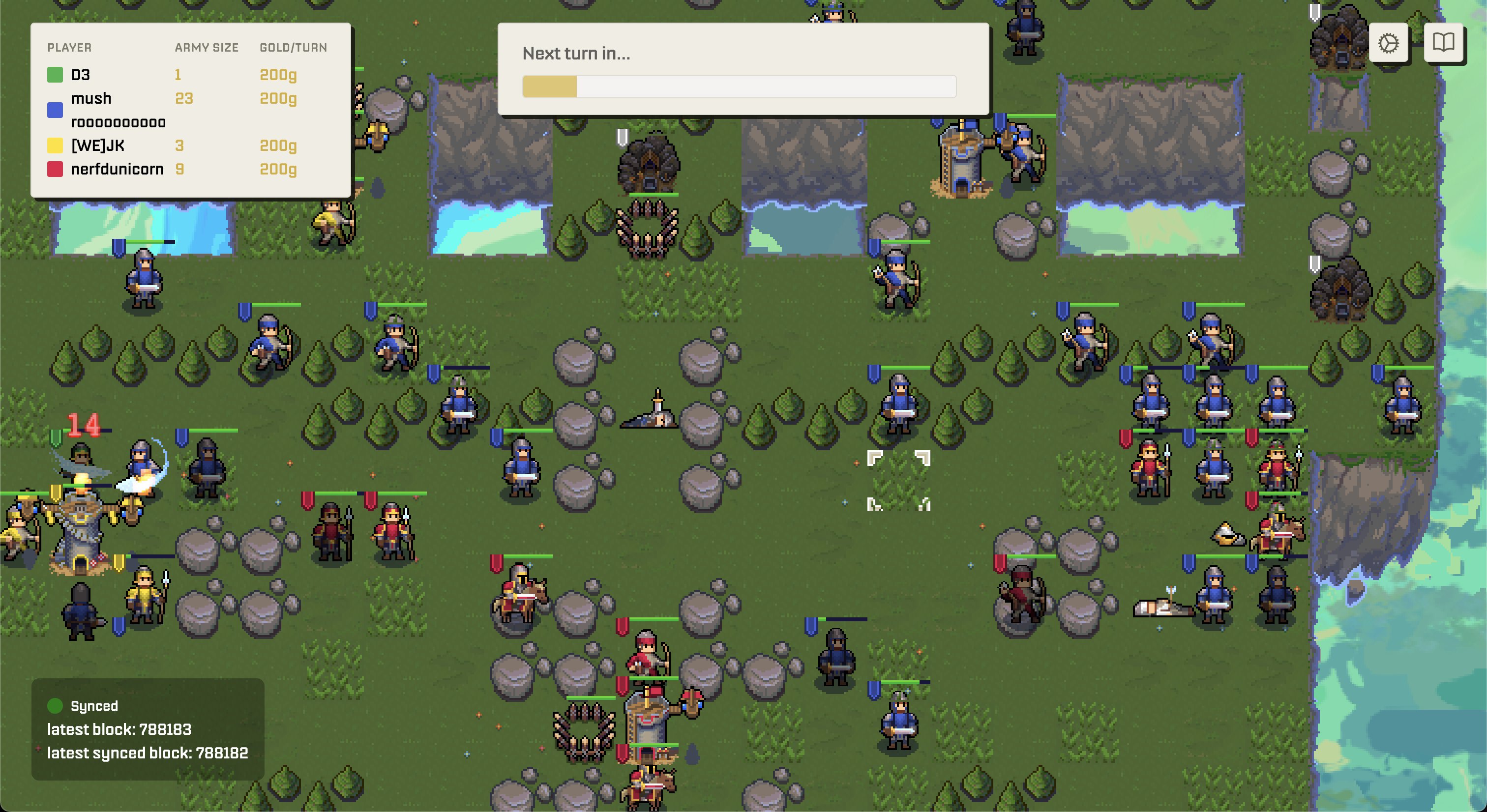
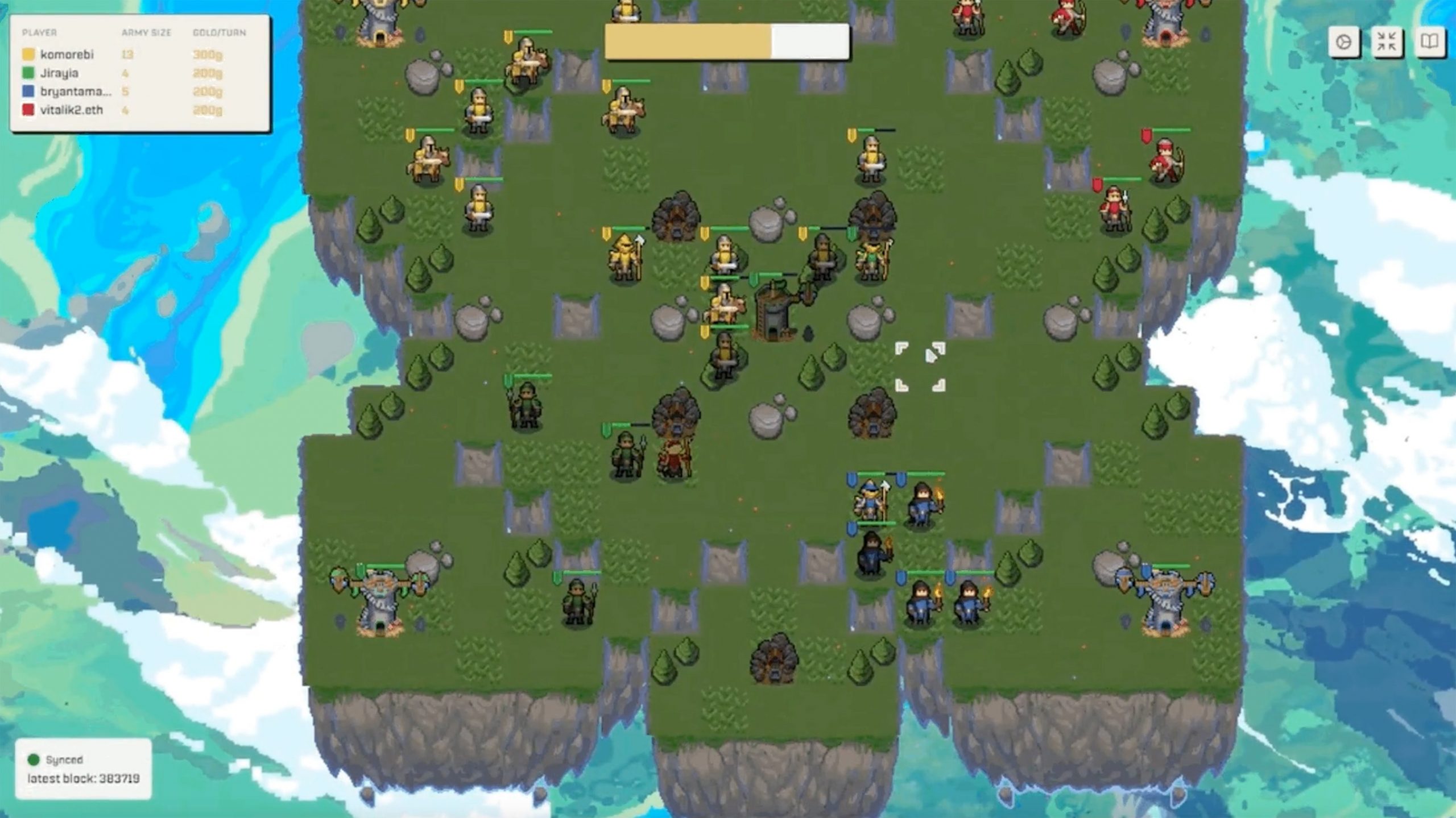
Sky Strife: A fully on-chain real-time strategy game built with MUD, featuring persistent battles and modular worlds on Ethereum.
-
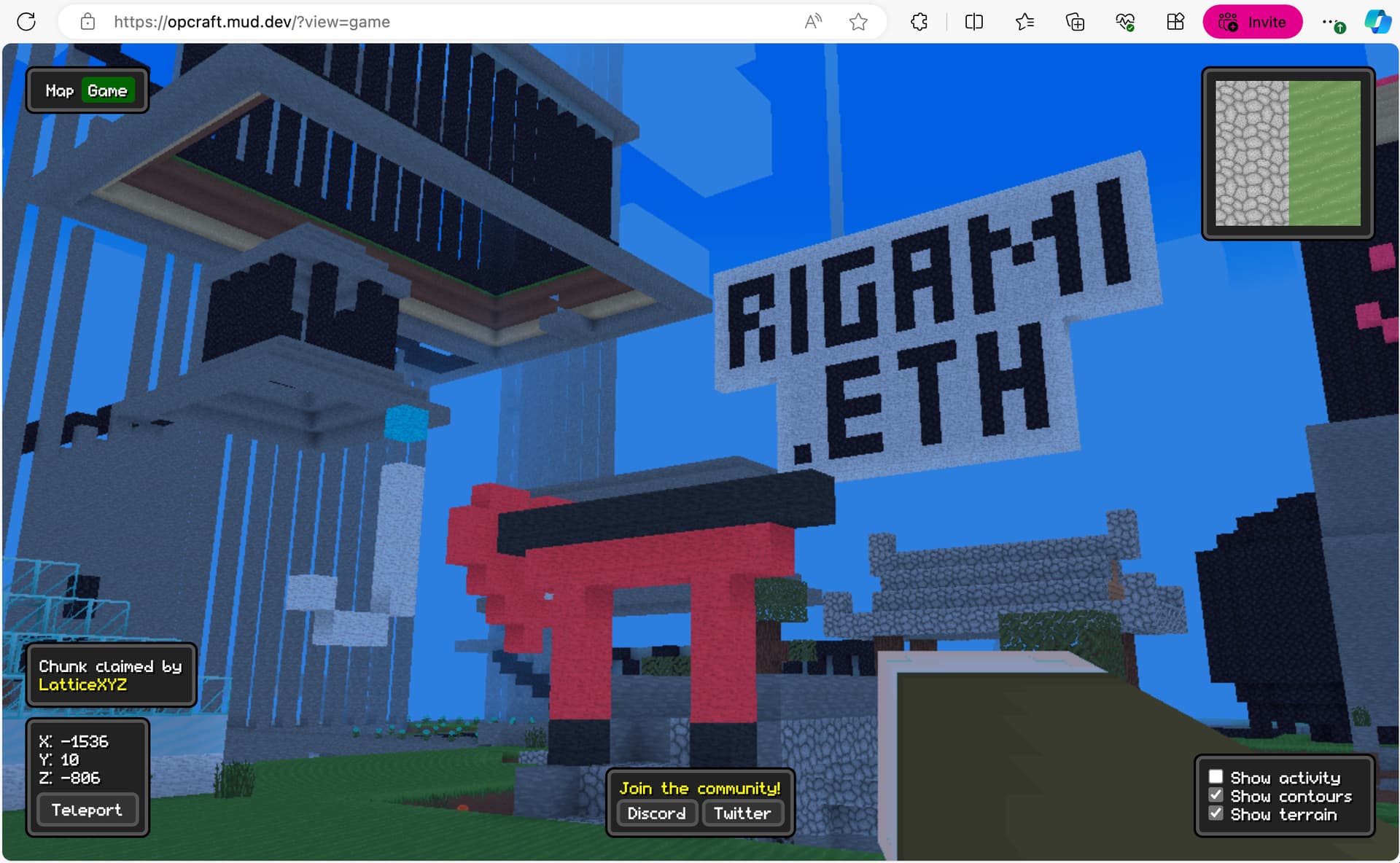
Opcraft: Minecraft-inspired on-chain survival game using MUD’s ECS architecture for infinite, player-owned worlds.
-
Primodium: Sci-fi RTS with fully on-chain mechanics via MUD, emphasizing deterministic gameplay and composability.
-
Words3: Collaborative word game on MUD, blending blockchain transparency with social puzzle-solving.
Games like Sky Strife showcase aerial dogfights etched on-chain, proving MUD’s chops for high-stakes action. Developers love its automatic type generation and state sync, slashing boilerplate code. For those eyeing MUD blockchain games 2026, MUD offers rapid prototyping without sacrificing determinism.
Dojo: StarkNet’s Zero-Knowledge Game Engine
Contrast MUD’s Ethereum focus with Dojo, the StarkNet specialist forged by Realms, Briq, and Cartridge teams. Also ECS-based but Cairo-written, Dojo delivers provable games via zero-knowledge proofs. Its stack shines: Sozo CLI for deployment, Torii for indexing and RPC, Katana as consensus sequencer. Odaily. news lists hits like Beer Baron, Chess Dojo, Loot Underworld, and more – 18 titles strong.
Dojo adapts ECS for StarkNet’s scalability, ensuring fair, verifiable state changes. Players in Dope Wars or Pistols at Ten Blocks trust the math, not the host. This framework excels in turn-based and strategy genres, where provability trumps speed.
These pillars – MUD’s modularity, Dojo’s proofs – fuel the Mud Dojo framework synergy. Yet, choosing demands nuance. Ethereum loyalists gravitate to MUD for its EVM familiarity; StarkNet adventurers pick Dojo for cost-efficient ZK magic. As we peel back layers, the builder’s path clarifies. For hands-on dives, check this practical guide.
Builders drawn to the Mud Dojo framework often start with a simple prototype: define entities like players or resources, attach components for health or position, and script systems to resolve turns. This ECS dance ensures every action is atomic, broadcast to the chain without intermediaries. Imagine scripting a battle in Sky Strife – positions update, damage calculates, all provably fair. MUD’s Store handles the data persistence, while Dojo’s Torii indexes queries at lightspeed for frontends.
Hands-On: From Code to Chain Deployment
Diving into development reveals why these frameworks shine for fully on-chain games Mud enthusiasts. MUD streamlines Ethereum deploys with its CLI wizardry, generating TypeScript hooks from Solidity schemas. Dojo’s Sozo mirrors this for Cairo, bundling contracts into executor worlds. Both enforce determinism – no floating-point pitfalls or RNG sleight-of-hand. Developers iterate fast: tweak a system, redeploy, watch the world adapt.
Such snippets form the bedrock. For Ethereum builders, MUD’s World contract acts as a registry, upgrading modules without forking state. Dojo counters with Katana’s sequencer, batching transactions for sub-second confirmations on StarkNet. Odaily. news spotlights Dojo’s roster – from Emoji Man’s absurd antics to Drive AI’s emergent behaviors – proving versatility beyond chessboards. MUD counters with Primodium’s vast simulations, where thousands of agents roam procedurally.
Yet synergy beckons. Hybrid visions emerge: MUD fronts for EVM liquidity, Dojo backends for ZK proofs. Events like Pragma Construct blur lines, fostering cross-chain autonomous worlds. YBB’s Medium deep-dive affirms: full-chain realization hinges on these engines’ data layers. Gate. com paradigms pit them against Zypher, but MUD and Dojo lead in adoption, their ECS unlocking real-time without off-chain crutches.
Challenges and the Road to Mass Adoption
No revolution skips pitfalls. Gas wars plague MUD on Ethereum mainnet, though L2s like Base mitigate this. Dojo sidesteps via StarkNet’s parallelism, but Cairo’s learning curve daunts Solidity veterans. Frontend sync lags in high-volume worlds, demanding indexed RPCs like Torii. Still, these are growing pains. BITKRAFT’s zkDungeon origin story reminds us: persistence pays. As L2 matures, expect MUD blockchain games 2026 to flood with MOBAs, survival epics, even social sims.
Players benefit most. Ownership feels visceral – trade assets mid-game, fork worlds for mods, compose with others’ contracts. Words3’s word wars or Loot Underworld’s roguelikes embody this composability. Developers gain virality: one killer system ripples across ecosystems. For aspiring creators, start small. Prototype a tic-tac-toe on testnet, scale to empires. Detailed walkthroughs abound, like this step-by-step for Mud and Dojo or MUD-specific blueprint.
Venture deeper into Dojo on-chain gaming, and StarkNet’s fee model unlocks micro-transactions impossible elsewhere. Beer Baron thrives on this, turning brews into blockchain empires. MUD’s Ethereum ties lure NFT marketplaces, fueling Opcraft’s voxel realms. Together, they chart new age MUD gaming‘s horizon: worlds where code writes history, players script legends, and blockchains hum with untold stories waiting to unfold.