
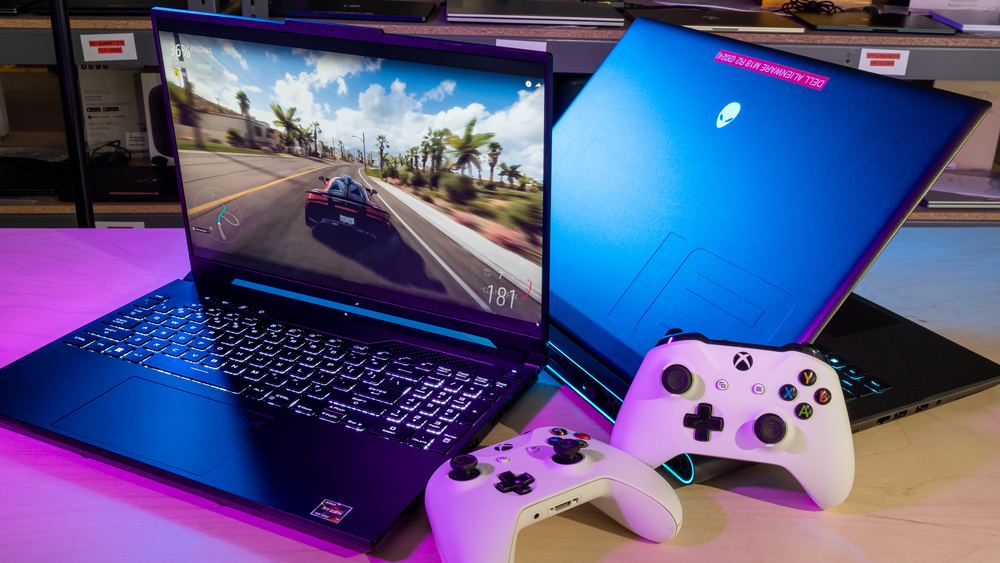
Our top gaming laptop picks
Use this section to make the Best Gaming Laptops of decision easier to compare in real life, not just on paper. Start with the reader's actual constraint, then separate must-have requirements from details that are merely nice to have. A practical choice should survive normal use, maintenance, timing, and budget. If a recommendation only works in an ideal situation, call that out plainly and give the reader a fallback path.
The simplest way to use this section is to write down the must-have criteria first, then compare each option against those criteria before weighing nice-to-have features.
Why the RTX 50-series matters now
The shift to NVIDIA’s RTX 50-series GPUs marks a distinct change in how 2026 gaming laptops handle graphical fidelity. While previous generations chased raw rasterization power, the current architecture prioritizes efficiency through AI-driven rendering. This transition is most visible in the memory configurations of the mid-to-high-end chips, which now offer significantly more video RAM to handle modern texture loads without stuttering.
VRAM capacity has become the primary bottleneck for future-proofing. As seen in community discussions, users are advised to start with at least 12GB of VRAM, a threshold met by the RTX 5070 Ti and higher models like the 5080 with 16GB. This increase allows laptops such as the Alienware 16X Aurora and the Acer Nitro V 16 AI to maintain high-resolution textures in demanding titles without forcing the system to offload data to the slower system RAM.
This memory headroom works in tandem with AI upscaling technologies like DLSS 4. Instead of rendering every pixel at native resolution, the GPU renders at a lower internal resolution and uses neural networks to reconstruct the image. This approach maintains high frame rates while preserving visual clarity, making the RTX 50-series a more viable option for high-refresh-rate gaming on portable screens.
Choosing the right screen resolution and refresh rate
The display is where you feel the difference between the RTX 50-series and previous generations. In 2026, AI upscaling like DLSS 4 has shifted the priority from raw pixel count to refresh rate. A high-refresh 1440p panel often provides a smoother, more responsive experience than a sluggish 4K screen, especially in competitive shooters.
For most gamers, 1440p remains the sweet spot. It balances visual fidelity with performance, allowing the RTX 5060 and 5070 variants to hit high frame rates without the thermal penalties of 4K. If you play fast-paced titles like Valorant or Counter-Strike, aim for 165Hz or higher. The difference in responsiveness is immediate.
4K panels are reserved for the RTX 5080 and 5090 laptops, such as the Acer Predator Helios 18 or Asus ROG Strix Scar 18. These machines use AI upscaling to maintain playable framerates at 4K, but the power draw is significant. Unless you prioritize cinematic immersion over competitive frame rates, stick to 1440p.
| Model | GPU | Screen | Refresh Rate |
|---|---|---|---|
| Alienware 16 Aurora | RTX 5070 | 16-inch QHD+ | 240Hz |
| Acer Nitro V 16 AI | RTX 5060 | 16-inch FHD+ | 165Hz |
| Lenovo Legion 9i | RTX 5090 | 16-inch 4K Mini-LED | 120Hz |
| Acer Predator Helios 18 | RTX 5080 | 18-inch QHD+ | 240Hz |
Best budget and mid-range options
You do not need to spend over $2,000 to get a machine that runs modern titles at high frame rates. The 2026 market has shifted toward value, with the RTX 50-series bringing DLSS 4 and AI upscaling to mid-range GPUs. This technology allows cards like the RTX 5060 to punch above their weight class, delivering performance that rivals last year’s high-end models. For price-sensitive buyers, the goal is finding the sweet spot where the GPU meets a capable CPU without paying for premium chassis materials.
Acer Nitro V 16 AI
The Acer Nitro V 16 AI stands out as the most accessible entry point for RTX 50-series gaming. It pairs a solid AMD Ryzen processor with an NVIDIA RTX 5060, creating a balanced system for 1080p and 1440p gaming. While the plastic build feels less premium than the Alienware options, the cooling system is adequate for sustained sessions. It is the best choice if your primary constraint is the initial purchase price.
Alienware 16X Aurora
If you can stretch your budget slightly, the Alienware 16X Aurora offers a more refined experience. It typically features an Intel Core Ultra processor and an RTX 5060 or 5070, depending on the configuration. The chassis is sturdier, and the display options are generally brighter and more color-accurate. This model bridges the gap between budget and enthusiast, offering better thermals and build quality for those who plan to keep the laptop for several years.
MSI Katana 15 HX
The MSI Katana 15 HX is a workhorse for pure performance per dollar. It often utilizes an Intel Core i7 HX-series CPU, which provides strong multi-core performance for gaming and streaming simultaneously. The design is utilitarian, but the internals are robust. It is a strong contender for gamers who prioritize raw FPS over aesthetic flair or portability.


As an Amazon Associate, we may earn from qualifying purchases.
What to check before buying
Specs like the RTX 50-series GPU tell you what a laptop can do, but thermals and battery life determine how it feels to use. A powerful chip trapped in a thin chassis will throttle, while a heavy brick with poor port placement becomes a desk accessory rather than a mobile tool.
Thermal management is the silent bottleneck. Models like the Alienware 16X Aurora use advanced vapor chambers to sustain boost clocks during long gaming sessions, whereas thinner ultrabooks often struggle with heat dissipation. Check reviews for thermal throttling tests; if the CPU drops frequencies after ten minutes, the cooling solution is insufficient for serious workloads.
Battery life remains a compromise for gaming rigs, but AI upscaling helps extend playtime. Technologies like DLSS 4 can render games at lower native resolutions and upscale them, reducing GPU load and saving power. For instance, the Acer Nitro V 16 AI balances this efficiency with enough cooling to keep frame rates stable, offering a practical middle ground for travelers.
Port selection often gets overlooked until you need it. Modern gaming laptops prioritize USB-C and Thunderbolt 5 for high-speed data and display output, but legacy HDMI 2.1 ports are still essential for connecting to 4K monitors without adapters. Ensure the laptop has enough rear-facing ports to keep cables from obstructing your mouse or keyboard.
Frequently asked questions about 2026 laptops
Is 12GB VRAM enough for the RTX 5070 Ti?
Yes, 12GB of VRAM on the RTX 5070 Ti is the new baseline for 1440p gaming. The RTX 50-series uses efficient memory architectures, so models like the Acer Nitro V 16 AI manage high resolutions better than previous generations. However, if you plan to game at 4K, 16GB or more is safer.
How does AI upscaling affect battery life?
AI upscaling features like DLSS 4 can actually help battery life by rendering games at lower internal resolutions. This reduces the strain on the GPU, allowing laptops like the ASUS ROG Zephyrus G14 to run longer on a single charge while maintaining smooth frame rates.
Should I wait for the RTX 5080?
The RTX 5080 with 16GB VRAM is ideal for high-end 4K gaming. If your budget allows, it offers better longevity. For most users, the RTX 5070 Ti in laptops like the Alienware 16X Aurora provides the best balance of performance and price for 2026.
No comments yet. Be the first to share your thoughts!