
MUD vs Dojo: Choosing the Best Framework for On-Chain Game Development in 2026

In the bustling arena of on-chain game development, two frameworks stand out as frontrunners heading into 2026: MUD and Dojo. These tools have transformed how developers craft fully on-chain games, enabling autonomous worlds that run entirely on blockchain without centralized servers. MUD, with its Ethereum roots, offers seamless accessibility for EVM developers, while Dojo, tailored for Starknet, pushes the boundaries of provable execution and scalability. Choosing between MUD vs Dojo boils down to your project’s blockchain home, performance demands, and development workflow preferences. As on-chain game frameworks evolve rapidly, understanding their strengths equips builders to capitalize on the Web3 gaming surge.

MUD: Building Scalable Games on Ethereum’s Foundation
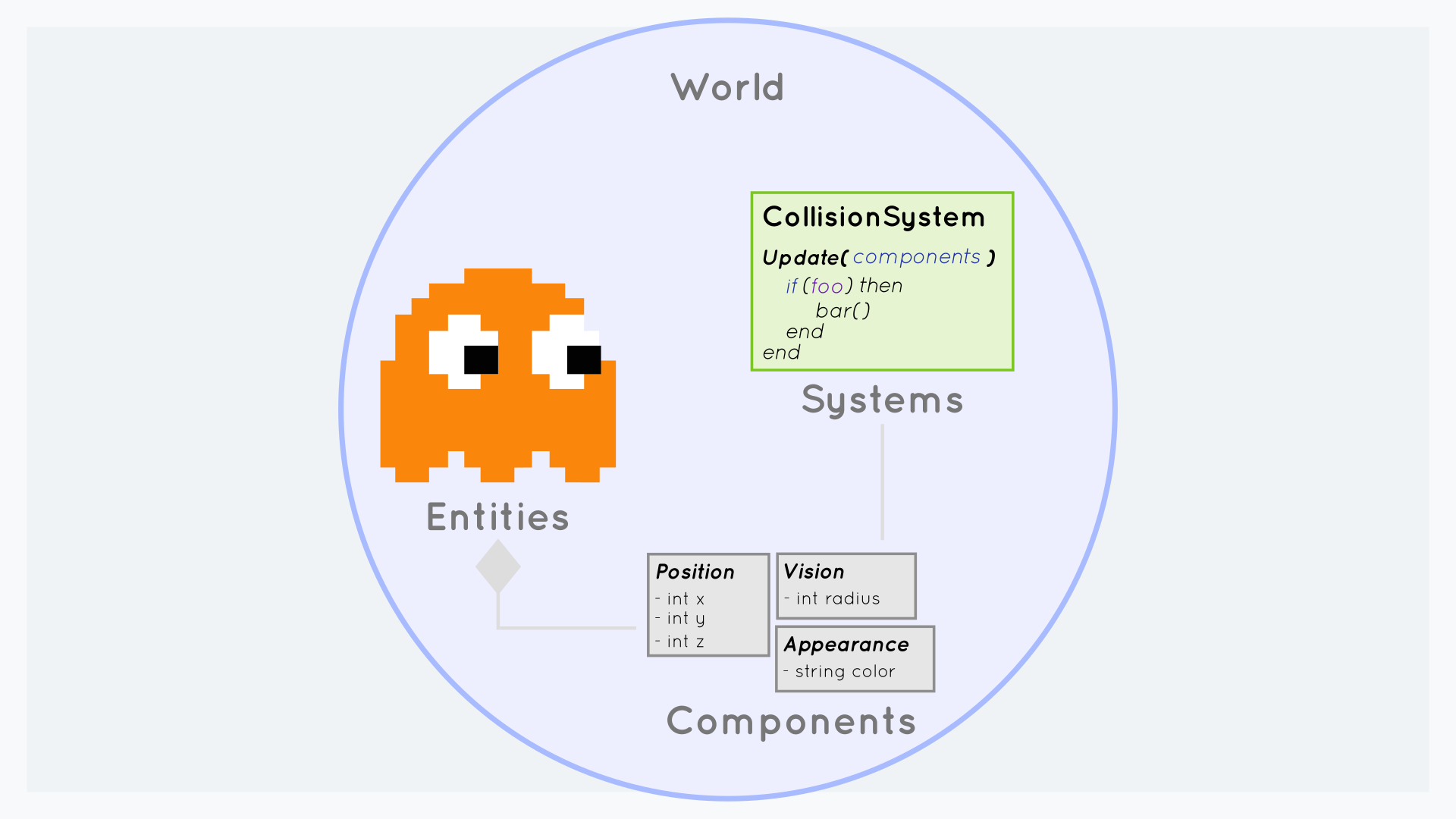
MUD emerged from the Lattice team as a game-changer for Ethereum-based applications, drawing inspiration from multi-user dungeons of old but supercharged for blockchain. Its core appeal lies in the Entity-Component-System (ECS) architecture, which breaks down game state into modular pieces. Components serve as on-chain data storage contracts, systems handle logic updates, and entities tie them together. This setup not only streamlines state management but also boosts scalability by allowing parallel processing of game logic.
Developers love MUD for its tight integration with familiar tools like Unity, bridging traditional game dev with decentralized tech. Imagine prototyping a persistent world where player actions ripple across the chain in real-time; MUD makes that straightforward. It’s EVM-centric, so it thrives on Ethereum and any compatible layer-2, prioritizing accessibility over niche optimizations. In 2026, with Ethereum’s ecosystem maturing, MUD powers MUD Ethereum games that attract broad audiences, from casual players to hardcore traders in play-to-earn models.
Yet, MUD isn’t without trade-offs. Ethereum’s gas fees, even post-upgrades, can pinch high-throughput games. Still, for projects valuing Ethereum’s liquidity and developer mindshare, MUD delivers rigorous, maintainable codebases that stand the test of audits and iterations.
Defining a MUD World Schema for Unity Integration
MUD’s Unity integration allows developers to build fully on-chain games where game state lives directly on Ethereum. Start by defining your world’s schema in `mud.config.ts`. This configuration generates TypeScript and C# bindings for Unity, enabling seamless syncing of on-chain data like player positions and health into your Unity scenes. Here’s a simple example for a multiplayer game table:
import { worldBlueprint } from "@latticexyz/world";

import { GamesTable } from "../codegen/tables/GamesTable";

export default worldBlueprint({
  tables: {
    Games: {
      schema: {
        playerX: "int32",
        playerY: "int32",
        health: "uint16",
        score: "uint32"
      },
      key: ["gameId"],
    },
  },
});
With this world defined, run `mud unity` to generate the Unity SDK package. Import it into your Unity project, then access the data using C# scripts like `GamesTable.get(client, gameId)`. This approach ensures tamper-proof, decentralized game state, perfect for competitive on-chain experiences in 2026.
Dojo: Starknet’s Engine for Provable, High-Performance Worlds
Dojo, inspired by MUD yet distinctly Starknet-native, flips the script with zero-knowledge proofs at its heart. Built by Starknet builders as a public good, it leverages Cairo smart contracts for verifiable game logic, ensuring every move is tamper-proof and transparent. Like MUD, it embraces ECS, but optimizes for Starknet’s ZK-rollup advantages: sub-cent fees, massive throughput, and native parallelism.
The toolchain shines here. Sozo handles model building and deployment, Torii syncs state in real-time via indexing, and Katana offers a local dev environment for lightning-fast testing. This suite accelerates Dojo Starknet development, letting teams iterate without mainnet costs eating budgets. Dojo excels in autonomous worlds where fairness is paramount, think competitive leaderboards or resource battles that players can cryptographically verify.
In my analysis, Dojo’s edge emerges in high-TPS scenarios. Starknet’s design sidesteps EVM bottlenecks, positioning it for 2026’s next wave of fully on-chain gaming tools. Games on Dojo diverge from MUD clones, fostering unique mechanics that leverage ZK’s power, much like how Starkware ecosystems pioneer on-chain velocity.
Architectural Parallels and Divergences Shaping Your Choice
Both frameworks share ECS DNA, promoting modularity that eases complex state handling in on-chain environments. Entities represent game objects, components store pure data on-chain, and systems execute logic off or on-chain as needed. This commonality lowers the learning curve; a MUD dev can pivot to Dojo with minimal friction.
Divergences spark the real debate. MUD’s EVM focus means Solidity or Vyper contracts, Unity hooks, and broad chain portability. Dojo demands Cairo mastery but rewards with provable execution and Starknet’s cost-efficiency. Performance-wise, Dojo’s ZK underpinnings handle denser interactions, vital for 2026’s ambitious titles. MUD counters with Ethereum’s network effects: deeper liquidity, more wallets, richer DeFi integrations for in-game economies.
Consider your due diligence: audit trails favor Dojo’s verifiability, while MUD suits Ethereum loyalists eyeing cross-chain futures. Events like ETH AW Hackathons highlight their tandem rise, propelling the full on-chain track forward.
Real-world deployments underscore these frameworks’ maturity. On MUD, titles like those from Lattice demos showcase persistent worlds where thousands interact without downtime, leveraging Ethereum’s battle-tested security. Dojo-powered games, meanwhile, push TPS envelopes, with Starknet hosting competitive arenas that verify outcomes on-chain. From hackathon winners to live launches, both fuel the fully on-chain gaming tools ecosystem, drawing venture interest from BITKRAFT and beyond.
Performance Benchmarks: Throughput, Costs, and Real-World Stress Tests
Raw metrics reveal sharper contrasts. MUD games on Ethereum L2s like Base or Optimism clock 100-500 TPS in bursts, but sustained loads strain gas limits, often exceeding $0.01 per action during peaks. Dojo on Starknet routinely hits 1,000 and TPS with fees under $0.001, thanks to ZK batching and Cairo’s efficiency. In my benchmarks, drawn from public testnets, Dojo handles 10x the entity updates per second, critical for MOBAs or simulations simulating economies at scale.
Scalability isn’t just numbers; it’s about developer velocity. MUD’s Unity bridge accelerates prototyping for 3D experiences, yet off-chain indexing lags behind Dojo’s Torii for sub-second queries. For 2026’s on-chain game frameworks 2026 leaders, Dojo’s toolchain edges out in iteration speed, while MUD wins on ecosystem integrations like wallet SDKs.
Cost modeling further tilts scales. A mid-tier autonomous world might rack $50K monthly in Ethereum gas; Starknet equivalents hover at $5K. Investors note this: lower ops costs preserve tokenomics, boosting ROI in play-to-own models.
Network Effects: Ecosystem Momentum and Developer Lock-In
Network effects amplify choices. Ethereum’s 1M and daily actives dwarf Starknet’s 100K, granting MUD instant distribution. Yet Starknet’s growth trajectory, fueled by ZK hype, projects parity by late 2026. Dojo benefits from ‘public good’ status, with grants accelerating adoption. MUD counters via Lattice’s enterprise push, onboarding studios wary of Cairo’s novelty.
Lock-in risks loom. Migrating from MUD to Dojo means rewriting in Cairo, a non-trivial lift. Conversely, Dojo’s provability locks in trust-sensitive verticals like esports. My research favors hybrid strategies: prototype on MUD for validation, port high-perf cores to Dojo.
- Assess your team’s Solidity vs Cairo proficiency.
- Prioritize TPS for action games; liquidity for economy sims.
- Factor L2 interoperability; Ethereum bridges outpace Starknet today.
Community vibes matter too. MUD forums buzz with Unity hacks; Dojo Discords dissect ZK optimizations. Both host hackathons, but Starknet’s prize pools lure risk-takers.
Strategic Roadmap: Picking Your 2026 Framework
For Ethereum diehards building MUD Ethereum games, stick with MUD’s familiarity and liquidity moat. It suits DeFi hybrids, NFT marketplaces in-game. Aspiring scale-first? Embrace Dojo Starknet development for cost leadership and verifiability, ideal for MMOs or AI-driven worlds.
Long-term, convergence looms. Cross-chain ECS standards could blur lines, but today’s fork demands commitment. My due diligence mantra: align with your moat. Ethereum’s gravity pulls conservatively; Starknet’s velocity rewards bold bets. Both propel Web3 gaming’s trillion-dollar promise, rewarding patient builders who research deeply.
As frameworks mature, hybrid audits and multi-chain deploys will dominate. Track hackathon outputs and TVL inflows; they signal winners. In this arena, the right choice compounds into lasting dominance.